
Connectivity: assume the network will disappear
Multi-IMSI or multi-network SIM profiles let the terminal re-register on whichever operator is reachable instead of roaming onto a single failing partner. Where roaming agreements are weak, terminals are configured with local APN fallbacks per country.
Device memory is sized so several days of records buffer locally and flush automatically once a bearer returns, keeping the trip history continuous.
- Store-and-forward buffering across dead zones
- Country-specific APN fallback order
- Reduced payload intervals in roaming to control data cost
Corridor geofences instead of point geofences
Rather than fencing only depots, we fence the corridor itself as a polyline buffer. Any deviation beyond the buffer raises a route-departure alert, which catches diversions long before an unexpected stop is reported.
Border posts, weighbridges and approved night-halt yards are fenced separately so dwell time can be measured and disputed detention charges can be evidenced.
Trailers and unpowered assets
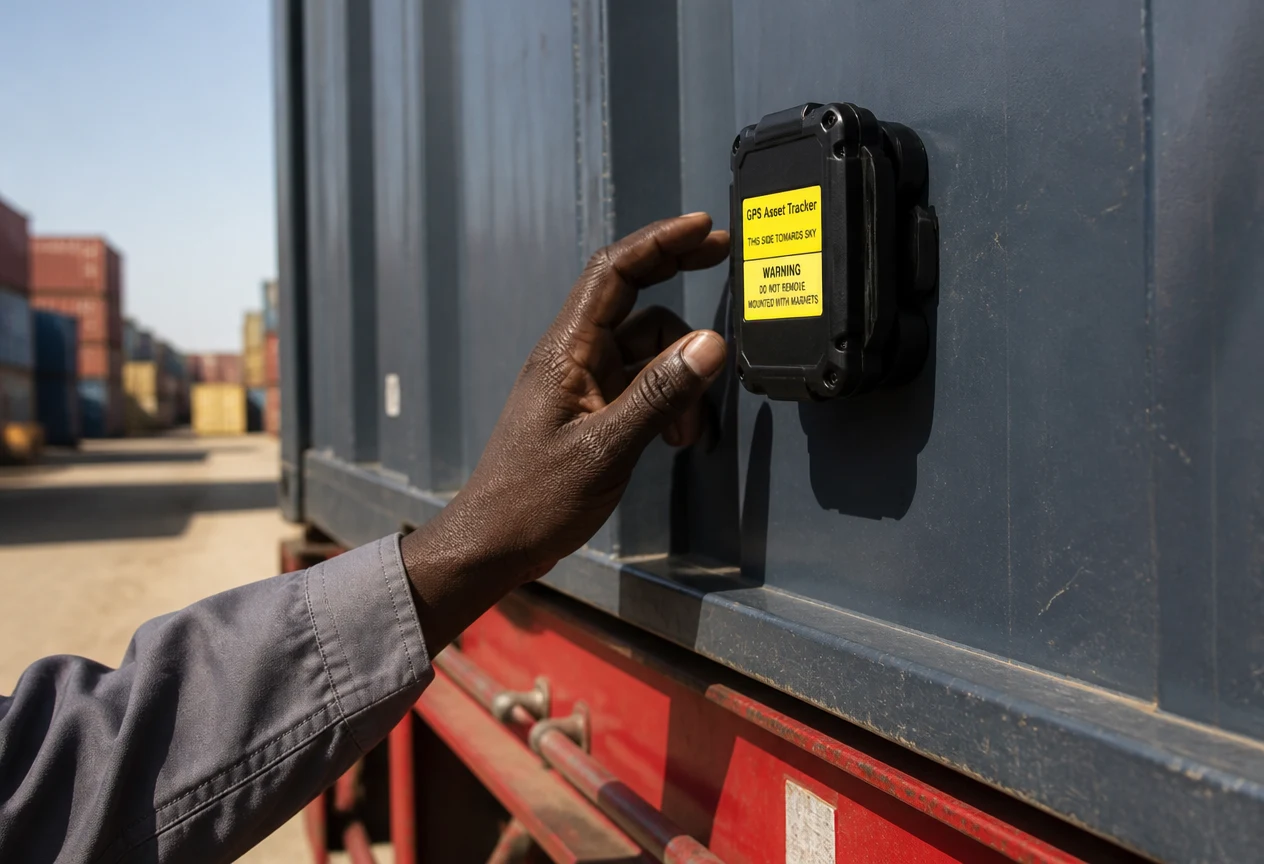
Battery-powered wire-free trackers are fitted to trailers, tanks and containers so an asset remains visible after it is detached from the prime mover. Reporting cadence is tuned to balance multi-year battery life against detection speed.
Operating across three jurisdictions
Equipment approval, SIM registration and data handling rules differ between Burundi, Tanzania and DR Congo. Fleet rollouts are sequenced so approvals are in place before hardware ships, avoiding trucks held at a border with unregistered devices.
Key takeaways
- Design for disconnection: buffering matters more than headline accuracy
- Corridor polyline fences detect diversion faster than depot fences
- Wire-free trackers preserve visibility on detached trailers
- Regulatory approval per country belongs in the project plan, not the punch list
Need this engineered on your fleet or plant?
Our engineers scope, install, commission and maintain across Burundi, Tanzania and DR Congo.